

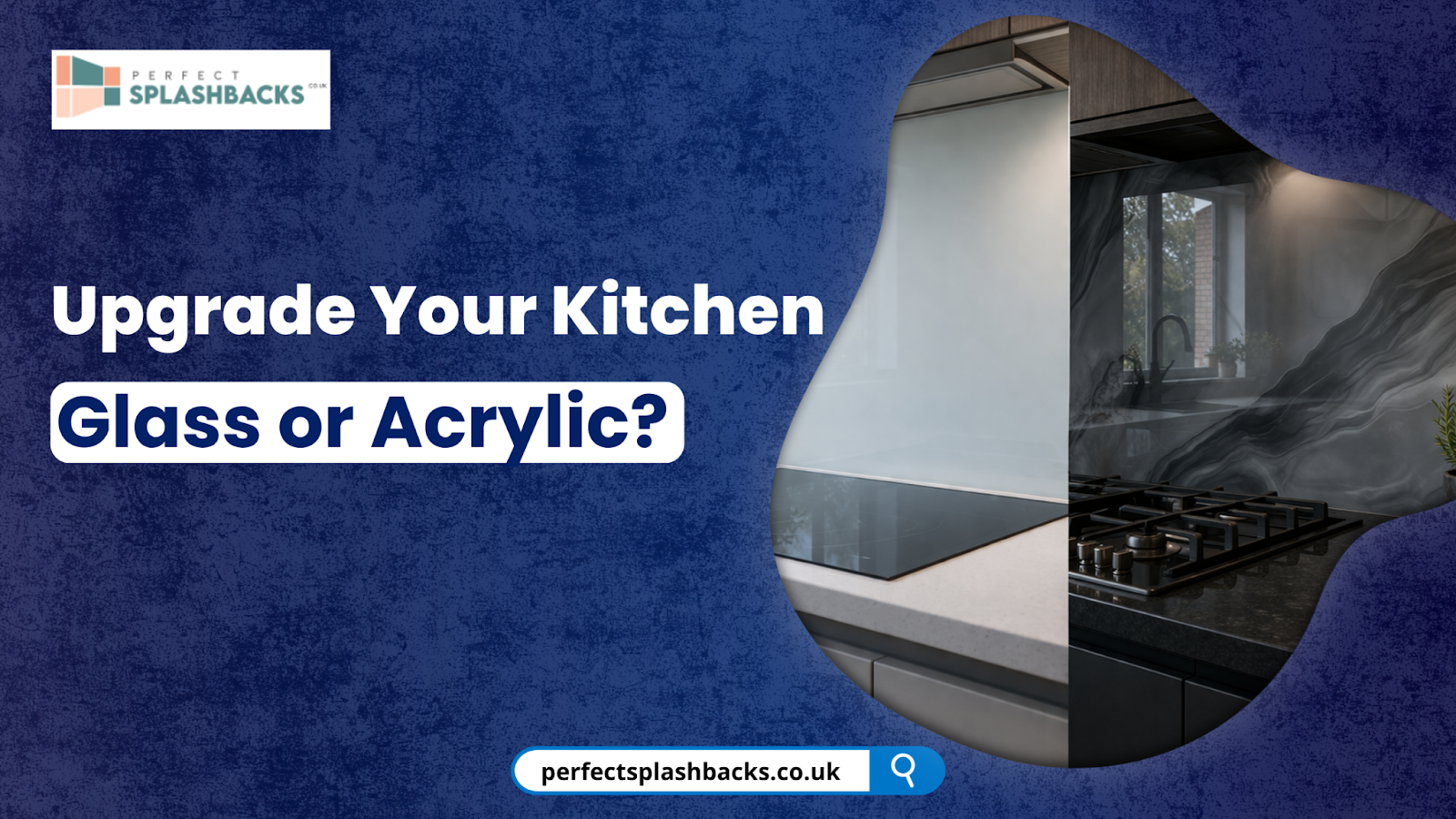
The splashback you choose can make a significant difference in your kitchen's appearance and functionality. The acrylic splashback is one of the most in-demand alternatives today, thanks to its current look, low prices, and wide range of applications. But how does it perform compared to the conventional glass?
As homeowners increasingly favour practical, stylish interior design, it is necessary to understand the distinctions. This guide shows the performance of each option in real kitchens, so you can determine which splashback solution best fits your space, lifestyle, and budget: an acrylic or glass splashback.
What Is a Kitchen Splashback?
A splashback is a protective wall installed behind a hob, sink, or worktop to protect against splashes, heat, and even stains. It is no longer merely functional in modern houses; it is also a major design element.
Modern kitchen splashbacks come in an extensive range of materials, colours, and finishes, allowing you to customise them to suit your style without compromising ease of cleaning. You can refer to it as a splashback or a kitchen backsplash, but its purpose is the same: protection that looks good.
What Are Acrylic Splashbacks?
An acrylic splashback is a high-quality plastic (commonly known as Perspex) that appears like glass but is more flexible.
They are particularly favoured in UK homes where they are lightweight, cheap and simple to install. Acrylic kitchen splashbacks are chosen by many people as an alternative to glass kitchen splashbacks due to their lower cost and modern appearance.
They also come in bold colours and finishes, including the popular coloured acrylic splashback style, and are well-suited in a modern kitchen design.
What Are Glass Splashbacks?
Glass splashbacks are made from tough glass, providing a superior, highly polished surface. They are durable, heat-resistant, and commonly used in areas behind hobs.
Glass is predominantly selected for its transparency and opulent appearance. It is a good light reflector that gives it a bright and airy appearance- particularly in small kitchens.
Nevertheless, it is pricier and denser than acrylic substitutes, and installation is often handled by a professional.
Glass and Acrylic Splashbacks: Major Differences
The key differences can be compared as follows:
|
Feature |
Acrylic Splashbacks |
Glass Splashbacks |
|
Cost |
More affordable |
Higher cost |
|
Weight |
Lightweight |
Heavy |
|
Installation |
DIY-friendly |
Requires professionals |
|
Heat Resistance |
Moderate (not for direct heat) |
High (ideal behind hobs) |
|
Durability |
Impact-resistant |
Scratch-resistant, but can crack |
|
Finish |
Glossy, similar to acrylic sheet |
Ultra-glossy, premium glass look |
|
Customisation |
Wide colour range |
Custom colours available |
Both of these have a niche in a modern kitchen- it is just a matter of what is important to you.
Design Option and Colour Choice
Both materials are breathtakingly versatile in terms of their aesthetics. Nonetheless, acrylic will likely prevail in terms of cost and selection.
Coloured acrylic splashbacks options allow you to match your cabinetry, worktops, or your entire kitchen theme without any trouble at all. Whether it is a statement in terms of colour or an understated palette, it is all there.
Glass splashbacks, on the other hand, are a little more sophisticated finish. They suit minimalist or luxury kitchens where a smooth, polished appearance is most important.
If you’re exploring modern acrylic splashbacks which is better for UK kitchens, acrylic often wins for flexibility and budget-conscious design.
Which Splashback Is Simpler To Install?
Acrylic is the obvious choice in case you have a DIY project.
An acrylic splashback is light and can usually be cut and fitted using normal tools. It is practical and can be used in upgrades or renovations of a quick kitchen.
However, glass splashback must be measured with precision and installed by professionals. They cannot be fitted by DIY because they are heavy and delicate to handle.
The ease of installation is another key factor many homeowners in the UK are considering, making acrylic a more convenient option.
Also Read: How to Add a Colourful Feature Wall to Your Kitchen?
Which Splashback Is More Appropriate for Cleaning And Maintenance?
The two are relatively low-maintenance materials, though there are minor differences.
Acrylic surfaces are hassle-free and can be wiped easily, thus making them suitable in busy homes. But they are more likely to be scratched when they are washed with abrasive substances.
Glass splashbacks are very resistant to stains and scratches and can withstand more intensive cleaning. This slightly increases their durability in high-use areas.
That said, modern kitchen splashback panels made of acrylic are intended to be tough enough for daily use under the right conditions.
When Acrylic Splashbacks Are the Better Choice
An acrylic splashback is preferable when:
- You are operating on a fixed budget.
- You are looking for a fast, easy installation.
- You like lightweight materials.
- You are remodelling your kitchen, not renovating.
- You are interested in various colours and finishes.
They are especially suitable for general walls and those not directly exposed to heat.
When Glass Splashbacks Are the Better Choice
Glass splashbacks are recommended in case:
- You require a lot of heat resistance (e.g. behind gas hobs)
- You desire a top, upscale finish.
- You are creating a high-end or designer kitchen.
- You like a very scratch-resistant surface.
Glass is a powerful competitor, among other things, when durability and a refined appearance are valued by homeowners.
Other Splashback Surfaces
In case you are still looking, the following are some of the alternatives you can consider:
- Tiles: Common and easy to maintain, though grout lines require regular maintenance.
- Stainless steel: Industrial appearance, very durable and simple to clean.
- Laminate panels: Less heat-resistant but cheaper.
- Stone (granite/marble): Luxurious but costly and cumbersome.
- Composite panels: Modern and durable, commonly featured in modern kitchens.
All the materials offer varying levels of style, price, and functionality.
Final Thoughts
So, what is more desirable, then, glass or acrylic?
For most households, it depends on priorities. Acrylic is a wonderful choice if you need something inexpensive, versatile, and easy to install. Conversely, when heat resistance and high-quality finish are of utmost importance, then glass could be a good investment.
In the end, both materials may produce beautiful effects when selected and used appropriately. The increasing popularity of kitchen splashbacks UK has provided the home owners to create kitchens that are both effective and appealing more than ever.
In case you need a sleek yet affordable option, it may be time to consider a good quality acrylic kitchen splashbacks.