


Food hygiene and safety are essential in a commercial kitchen. The finishes also need to withstand daily heat, moisture, spills, and cleaning, while meeting applicable food safety requirements. Wall protection, in particular, contributes to a cleaner, more productive work environment.
An acrylic splashback can provide strong impact resistance against wall damage whilst maintaining a sealed, hygienic surface. Designed for the rigorous demands of high-pressure food environments, acrylic sheets offer strength, cleanability, and low maintenance.
Professional kitchen splashbacks help ensure compliance, cleanliness, and visual organisation, even during the busiest service periods.
The Role of Splashbacks in Commercial Kitchen Sanitation
A kitchen splashback is a wall panel that provides protection and is installed behind cooking, washing, and food-processing surfaces.
A splashback shields walls from grease, water, food particles, and heat. When not, they are left unprotected, and moisture collects on the walls, turning them into a breeding ground for bacteria and mould.
In food preparation areas, hygiene risks are higher due to constant moisture and the presence of organic matter. Splashbacks help create a hygienic barrier between the walls and the work area, supporting effective commercial kitchen sanitation.
They also facilitate grease removal, making cleaning and maintenance easier and more effective every day. By eliminating porous surfaces, they play a vital role in meeting food hygiene standards in commercial kitchens.
Why Are Acrylic Splashbacks a Great Choice for Commercial Kitchens?
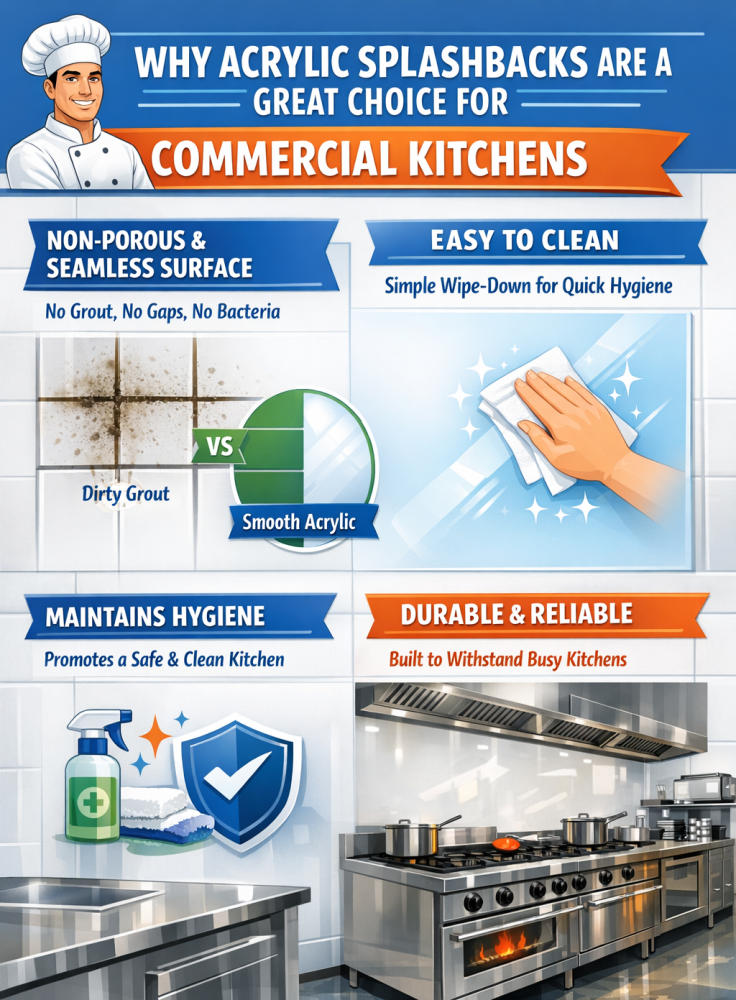
Professional kitchen splashbacks are mostly made of acrylic nowadays due to its non-porous and seamless surface. Tiled walls rely on grout to hold the tiles, which, over time, can become a home for dirt and bacteria.
It is very easy to clean this surface to a high standard because it has no crevices. Maintaining hygiene while keeping maintenance easy is also facilitated. A simple wipe-down is often enough to restore cleanliness, making acrylic one of the most safe materials for commercial kitchens. Its durability and hygiene-focused design make commercial kitchen acrylic splashbacks a practical and trusted option in demanding environments.
Heat-Resistant Properties and Practicality
Heat resistance is a critical factor in areas near cooktops, grills, and fryers. Heat-resistant kitchen splashbacks do not warp or discolour, even in very high-temperature zones.
When installed properly, acrylic panels in commercial kitchens are designed to withstand routine heat exposure. Tiles can crack, and stainless steel can show heat marks, whereas acrylic will keep a uniform look.
From a safety and compliance standpoint, heat resistance reduces the risk of surface damage, ensuring lasting performance and meeting kitchen safety requirements.
Acrylic vs Aluminium Splashbacks in Commercial Kitchens
Aluminium splashbacks are often chosen in commercial kitchens for their industrial look and heat resistance. Yet if you compare acrylic and aluminium, you will find they differ significantly.
Acrylic provides better hygiene because it is a single solid piece with no joints, whereas aluminium splashbacks are connected, which means they will require additional maintenance.
As for durability, both perform well; however, acrylic is better at resisting dents and scratches, particularly in high-traffic areas. Moreover, acrylic is easier to maintain because it does not easily show fingerprints or streaks.
From a cost-efficiency perspective, acrylic is often more cost-effective over the long term, especially when cleaning and replacement costs are considered. Some kitchens use different materials for different areas, but acrylic is a solid general choice.
| Feature | Acrylic Splashbacks | Aluminium Splashbacks |
| Hygiene | Superior: Single solid piece with no joints or seams where bacteria can hide. |
Moderate: Connected panels create joints that require extra sanitization.
|
| Surface Durability | High Impact: Flexible and resistant to dents and heavy impacts. | Susceptible: Prone to visible dents and "ding" marks in high-traffic areas. |
| Maintenance | Low Effort: Does not easily show fingerprints or streaks; simple wipe-down. | Higher Effort: Metallic surfaces show smudges, streaks, and oils more clearly. |
| Aesthetics | Seamless & Modern: Provides a continuous flow across large wall spans. | Industrial: Provides a rugged, professional "industrial" look but with visible joins. |
| Scratch Resistance | Reliable: Better at resisting surface scratches from daily kitchen bustle. | Lower: Softer metal surfaces can show fine scratches more prominently. |
| Long-Term Cost | Cost-Effective: Low cleaning labor costs and high durability deliver better ROI. | Moderate: Higher maintenance costs and potential for replacement due to dents. |
Strength and Economic Benefits Over Time
Commercial kitchens require materials that do not wear out quickly. Acrylic panels, being impact-resistant and built to last, are indeed perfect for durable splashbacks in the food prep areas. They withstand the daily impacts, cleaning agents, and water without becoming damaged.
Consequently, this toughness means less spending in the future. Lower maintenance, fewer changes, and a longer replacement life are benefits that make acrylic a strong choice. Additionally, sustainability is a key consideration, as durable materials produce less waste.
Splashback Ideas That Work For Restaurants And Food Service Businesses
Each kitchen has its own layout; therefore, it is necessary to have tailor-made solutions. Acrylic panels can be cut to size and installed with precision, making them effective splashback solutions for restaurants, cafés, catering kitchens, and hotels.
Because of their versatility, they support efficient kitchen workflows and help maintain consistent hygiene standards. With commercial kitchen acrylic splashbacks, food service businesses can focus on service rather than the ongoing maintenance of walls, thereby improving overall operational efficiency.
Aesthetic and Design-Related Benefits
Performance is definitely the first thing, but look also counts. Acrylic panels are a modern material for commercial kitchen design, offering clean lines and polished finishes. Additionally, they are available in a range of colors and finishes (matte to glossy), allowing customization to best match a company's brand or simply provide an attractive, warm, and professional atmosphere.
A well-designed kitchen boosts staff morale and reinforces cleanliness standards. Acrylic splashbacks combine hygiene with visual appeal, proving that practical surfaces don’t have to look purely industrial.
Food Safety and Hygiene Regulations
In addition to being easy to clean, non-absorbent surfaces also help meet inspectors' requirements. As washable kitchen wall panels, acrylic sheets provide an excellent surface for implementing efficient cleaning and documentation protocols.
Their ability to withstand moisture and bacteria helps kitchens stay in compliance with local safety regulations. Among the trusted suppliers is Perfect Splashbacks, which fully understands these regulatory requirements and therefore offers products that are not only compliant but also engineered for practical commercial use.
Conclusion
The appropriate wall covering in a high-traffic food environment is more than just a purchase; it is a tangible investment in the facility's efficiency and safety that will pay off in the long run. An acrylic splashback simplifies cleaning, enhances commercial kitchen sanitation, and helps the kitchen comply with safety regulations.
When compared with conventional options, commercial kitchen acrylic splashbacks offer a hygienic, long-lasting, and practical solution that is reliable even under the toughest conditions.
Acrylic panels, when used as professional kitchen splashbacks and heat-resistant kitchen splashbacks, offer a sound investment for any commercial kitchen focused on safety and efficiency. They offer long-lasting value, require minimal upkeep, and provide a tidier work area.
FAQs
1. Why should commercial kitchens choose acrylic splashbacks over traditional tiles?
Acrylic splashbacks offer superior hygiene, fewer joints, easier cleaning, faster installation, and a modern appearance. These benefits make them a preferred choice for enhancing safety and hygiene in commercial kitchens.
2. Can acrylic splashbacks be customized for different kitchen layouts?
Acrylic splashbacks can be custom-cut to fit specific kitchen layouts, equipment placements, and wall dimensions. They are also available in various colors and finishes to match branding or design preferences.
3. Do acrylic splashbacks help reduce maintenance costs?
Yes, their durability and ease of cleaning reduce long-term maintenance costs. They are less likely to crack, stain, or require repairs compared to tiles or painted walls, making them a cost-effective solution for commercial kitchens.
4. Are acrylic splashbacks resistant to heat and moisture?
Acrylic splashbacks are highly resistant to moisture and moderate heat, making them suitable for most kitchen environments. However, they should be installed with proper clearance from open flames or extreme heat sources to prevent damage.
5. Are acrylic splashbacks compliant with food safety standards?
Yes. When properly installed and maintained, acrylic splashbacks meet hygiene and cleanliness requirements commonly expected in commercial kitchens, food preparation areas, and catering facilities.